

When you start thinking about preparing your home for the approaching summer weather, the air conditioning system needs to receive special attention. It’s difficult to manage being indoors during the summer weather if a house isn’t equipped with a powerful central air conditioning system—and a reliable system as well. Power and reliability are what you most want from your AC during the summer season, with energy efficiency coming close behind. (Honestly, if power and reliability are in trouble, then energy efficiency almost certainly is as well, so they’re all linked.)
When you take an assessment of the AC, you may decide you need an air conditioning replacement in Palm Harbor, FL. Or maybe to schedule repair service for something wrong you noticed before. Let’s go a bit deeper into how you can analyze your air conditioning needs.



 You don’t need to be an expert on the science and mechanics of air conditioning to enjoy cooling from an air conditioner, the same way you don’t have to be an electrical engineer to benefit from the lights in your house. Trained professionals exist to help you in these areas.
 If you are asking this question, it means you have reason to believe the current air conditioning system that cools your house is coming to the end of its service. People often begin to consider replacing their residential AC in the fall, right after another intense Florida summer. Maybe the air conditioner struggled to maintain proper comfort on the hottest day, the cost to run it has risen, it needed a pricy repair—or needs a pricy repair right now.
 Children are heading back to school, and in a few months they’ll start bringing home report cards. But you can hand out a report card before school starts: a report card for your air conditioning system. How did it perform its job this summer? Did it sail through the season and keep those electrical bills steady? Or did it hit a few bumps along the way?
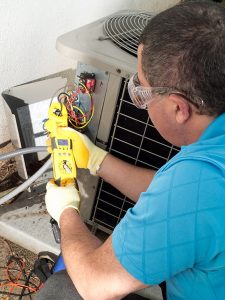 An air conditioning system is manufactured to use a specific amount of chemical refrigerant. This is known as an air conditioner’s charge. People often make the mistake of thinking refrigerant is an energy source for an air conditioner. It isn’t. The energy source of an air conditioner is electricity. Refrigerant is the heat transference medium that allows the air conditioner to move thermal energy outside of the house (cooling the indoor air) and exhausting it. The refrigerant evaporates and condenses in a cycle and never dissipates—so it will never get “used up.”