

Severe summer storms can roll through the Tampa Bay area with little warning, bringing heavy rain, high winds, lightning, and flying debris. While you may inspect your roof, windows, and yard afterward, don’t overlook your heating and cooling system. HVAC in Tampa can take a beating during severe weather, making a post-storm inspection an important step in protecting your comfort and preventing expensive repairs.
Start With a Visual Inspection
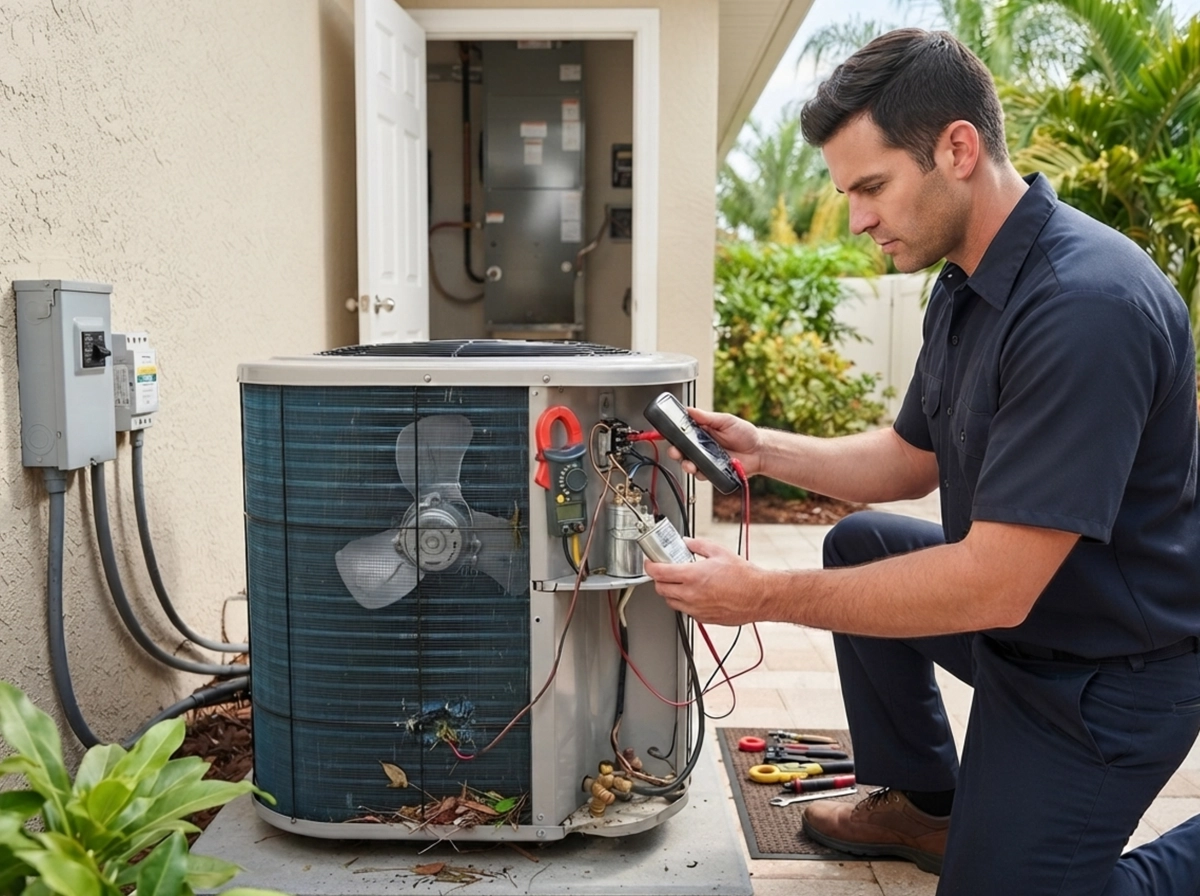
Before turning your system back on, take a walk around your outdoor unit. Look for obvious signs of damage, including bent fins, fallen tree branches, leaves, or other debris that may have collected around the condenser. If you notice standing water around the unit, wait until the area has drained before attempting to operate the system.
Keep at least two feet of clearance around the outdoor unit to ensure proper airflow. Removing debris promptly helps your HVAC system run more efficiently and reduces unnecessary strain on its components.
Check for Electrical Issues
Lightning and power surges can damage sensitive HVAC components. If your home lost power during the storm, check your circuit breaker before restarting your air conditioner. If the breaker has tripped, reset it once. If it trips again, avoid repeated attempts and call us.
Watch for warning signs like unusual noises, burning odors, or a system that refuses to start. These symptoms may indicate electrical damage that a qualified HVAC technician should inspect.
Listen and Feel for Normal Operation
Once everything appears safe, turn your system on and let it run for several minutes. Pay attention to how it sounds and performs. The air coming from your vents should feel cool, and the airflow should remain steady throughout your home.
If you hear grinding, rattling, buzzing, or squealing noises, your system may have sustained storm-related damage. Addressing these problems early can prevent a small repair from becoming a costly breakdown.
Replace a Dirty Air Filter
Storms often stir up extra dust, pollen, and debris that can clog your air filter. A dirty filter restricts airflow, reduces efficiency, and forces your HVAC system to work harder than necessary. Replacing the filter after a severe storm is an inexpensive way to improve indoor air quality and help your equipment operate at peak performance.
Schedule a Professional Inspection
Even if your HVAC system seems to be working normally, hidden storm damage may still exist. Electrical components, refrigerant lines, and internal parts can suffer damage that isn’t immediately visible. A professional inspection allows us to identify potential issues before they lead to unexpected failures during the hottest days of the year.
At The A/C Guy of Tampa Bay Inc., we’re committed to keeping your home comfortable and your HVAC system operating reliably. Whether your equipment needs a quick inspection, repairs, or routine maintenance, we’re here to help you recover after severe weather with honest recommendations and dependable service.
Don’t wait until a small problem becomes a major expense. A prompt post-storm HVAC inspection can also help identify damage that may be covered by your homeowner’s insurance, potentially saving you money on repairs.